Home
Share Internet News
Share Internet News
XX Information Network - Domestic and foreign news, current affairs, strange things, and new things

Time:2019-09-25 15:02:39Click:
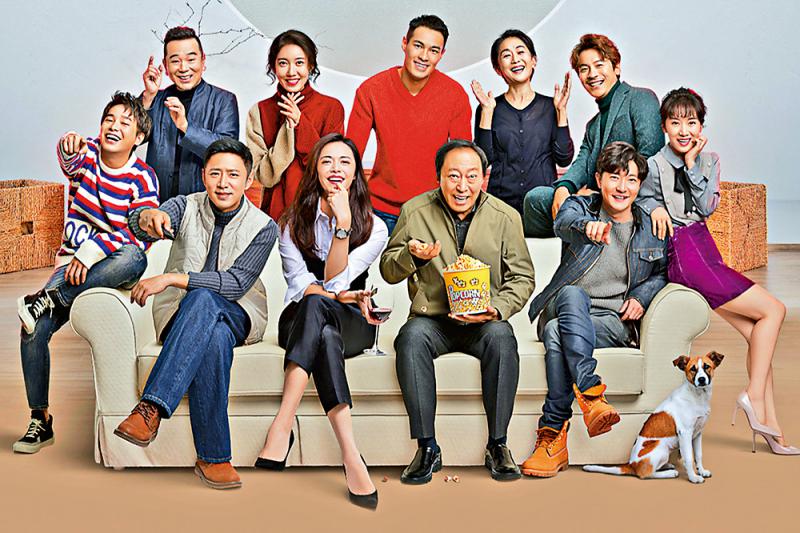
Picture: Mainland drama "Everything Is Fine" describes the contradictions and conflicts of Chinese-style families, arousing resonance\Internet pictures
Writer Anai and director Jian Chuanqi once portrayed Fan Shengmei, a daughter who lives in a family that values boys over girls in "Ode to Joy". Her parents often use their daughter's salary to cover their son's debts, and she is always the one who is sacrificed and sacrificed. Three years later, Anai and Jian Chuanxi once again "revisited old stories" and wrote the story of a Suzhou girl, Su Mingyu, who was also not valued and loved by her family, but became the best hope for a family that believed in favoring boys over girls. It saved the men of the Su family from the quagmire over and over again, and also broke the "raising children to protect old age" advocated in traditional family ethics. Time flies by. How will today's mainland ethics dramas tell the story of the reconciliation between this kind of daughter and her family?
Liu Yi
It is often said that family is the warmest harbor and "everything thrives when family is in harmony." Drama fans are also used to seeing responsible fathers, sons who are well versed in filial piety, virtuous wives and well-behaved daughters on TV. But "Everything Is Good" goes in the opposite direction. In the play, Su Mingyu (played by Yao Chen), who was ignored by her family, not only left home to enter the society since she was a child, but also lost the protection of her family. She is also the most responsible person in the family, and the other three men - her father Su Daqiang (played by Ni Dahong), eldest brother Su Mingzhe (Gao Xin) ) and second brother Su Mingcheng (played by Guo Jingfei) need to rely on Su Mingyu's help, thus directly impacting traditional concepts such as "the father is the head of the family, protecting his wife and children", "the son is the guarantee of old age", "the daughter is the outsider who cannot be counted on at all", "having a husband and children, everything is enough" and other traditional concepts.
"Du" is adapted from Anai's novel of the same name. The finale was broadcast on Zhejiang Satellite TV and Jiangsu Satellite TV at the end of last month. Although it does not have the appearance of a "blockbuster drama", the creators "captured people's hearts" in the daily trivial matters that are constantly being cut and sorted out. They use a spicy narrative perspective to explain the calculations and entanglements that occur between family members who are supposed to be enjoying themselves. On the surface, everything seems to be fine, but under the surface, it is the prevention and alienation between relatives.
Su Mingyu: The less taken seriously, the more you give
The strong woman Su Mingyu did not have a good life at the beginning of the story. Faced with a mother who constantly divided family resources between her two sons, and a father who did not know how to protect her daughter, she ran away from home since she was a teenager, and was separated from her native family. The family (the family of both men and women before marriage) cuts off contact and follows Meng Zhiyuan (played by Zhang Chenguang), the boss of Zhongcheng Group, to enter society, and eventually wins a considerable social status through hard work. The cold and decisive woman in the original novel is set up to be a soft-hearted female boss who constantly chooses to compromise with her original family. The other two women in the Su family - elder sister-in-law Wu Fei (played by Gao Lu) and second sister-in-law Zhu Li (played by Li Nian) are also rational people. But looking back at the words and deeds of Su Daqiang, Su Mingzhe and Su Mingcheng, the men of the Su family, in the words of drama fans: "Don't support Su Daqiang in old age, don't marry Su Mingzhe in marriage, and don't have children in Su Mingcheng." Since then, men and women have formed an anti-traditional opposition in the drama "Du". Women are independent and calm, but men still have room to grow and need to overcome unflattering personality traits such as selfishness, extreme love of face, cowardice and incompetence.
In the past, urban emotional dramas generally used a Cinderella-style story of "the domineering president fell in love with me", and Su Mingyu herself is a "domineering president". Although this character portrays the satisfaction Su Mingyu gained in the play, behind it is still a story of a female president who does not respect the logic of real-life behavior - after her mother passed away, she returned to the Su family and continued to use money and connections to help the Su family get rid of the troubles in life. She not only gained the trust and trust of Boss Meng, but also could selflessly tolerate her. Shi Tiandong (played by Yang Youning), the infinitely warm man of his family, actually over-exaggerates the success of this role, thereby neglecting to shape the distrust of intimate relationships and emotions of such children after experiencing the harm of their original family. As there are constant real-life cases to prove: "The psychological trauma caused by the absence of parental love while growing up will always make it difficult for them to get along with others in the future." And what is the probability that a successful and warm man like Shi Tiandong will fall in love with an older female executive like Su Mingyu, who has a strong personality like Su Mingyu in real life?
Su Mingyu’s various ways of helping the Su family illustrate the problem of "the daughter who is least valued often pays the most." In the thirty-ninth episode, there are signs of reconciliation, and the external cause of all this is that Su Mingzhe no longer escapes and faces his own shortcomings. ; Brother Su Mingcheng, who disliked Su Mingyu since he was a child and quarreled whenever they met, would beat those who insulted his sister's reputation in order to protect his sister's reputation; Su Daqiang suffered from Alzheimer's disease, and it was this daughter who had been owed a lot that could best afford her father's old age.
But what if Su Mingyu is just an ordinary girl with no money? Some people say that because Su Mingyu is the richest and her father is seriously ill, she quit her job to support the elderly at home, and even concealed her father's illness from Su Mingzhe in the United States and Su Mingcheng in Africa. But in fact, in real life, a daughter like Su Mingyu, who has a successful career and has never experienced the warmth of a family, will she really let go of everything and quit her hard-working career to take care of her father with Alzheimer's disease like in the finale? Food for thought. After all, pain from loved ones is the hardest to resolve, and the time when a daughter most needs the love and care of her parents has long gone.
Su Daqiang: Asking for help from children to fill loneliness
Looking at the whole drama, "Du" abandons the inherent model of family drama and no longer focuses on the relationship between mother-in-law and daughter-in-law and the conflict of values between the two generations. Instead, the strong role of mother-in-law disappears from the beginning, and a father who does not know how to be considerate of his children and overly values his own gains and losses triggers conflicts in the entire family. This kind of conflict no longer stems from the differences in parenting concepts and the emotional difficulties of couples in traditional family dramas, but only focuses on the conflict between fathers and children. This starting point also caters to the current trend of urbanites marrying later and having children later.
To be honest, the Su family and his son are not evil people. It is difficult to judge Su Daqiang’s character in terms of good or bad. He is selfish, greedy and loves money, but with the skillful acting of actor Ni Dahong, he is hateful, pitiful, lonely and childish all at once. Behind his seemingly hateful demands for his children, there is not only an unspeakable loneliness, but also an instinctive concern for his children in the details, such as his momentary shock when he heard that Su Mingcheng and Zhu Li were divorcing, covering his son Su Mingcheng with a blanket and cooking noodles after playing games all night.
Although Su Mingzhe loves face very much, he is also determined to support his parents. However, he is far away in the United States on the other side of the ocean. Not only is he powerless, but also because he is unemployed, he cannot even take care of his own small family. He is still buying a large house with three bedrooms and one living room for his father in Suzhou at the expense of the quality of life of his wife and daughter. Su Mingcheng, as an old man, is a child who has been spoiled by his mother since he was a child. Not only himself, but also frequently waving his fists at his sister and wife. However, Guo Jingfei's interpretation of Su Mingcheng, a completely disgusting character, is vivid and contagious, especially his scenes with Ni Dahong. Whenever the audience feels that the two of them are annoying, they also show the drama between them. The laughter during the interactions between the two actors made people laugh, especially the scene where Shi Tiandong was treated as a thief when he was delivering food to Su Daqiang. Ni Dahong and Guo Jingfei's portrayal of their father as an old boy and their son as an older child left a deep impression on people and made them smile.
The finale of the drama "To" was aired earlier. Some drama fans thought the ending was touching and made people think of their parents, while other viewers thought such a family-friendly way of handling it was unacceptable. In the last section, mother Zhao Meilan appeared in Su Mingyu's hallucination. In that hallucination world, the mother picked up her daughter who was bullied by her brother and said that she would seek justice from him for her. Su Mingyu's alienation from her mother caused her to spend her whole life imagining if her mother loved her so much, would everything be different? The same is true for me and other drama lovers. We don't like to listen to our parents' nagging, but we have the deepest ties of family ties. Sometimes we have quarrels that can't end due to the conflict of different concepts between the two generations, but every time we think back to the little moments when we got along with our parents when we were children, I feel heartbroken.





